

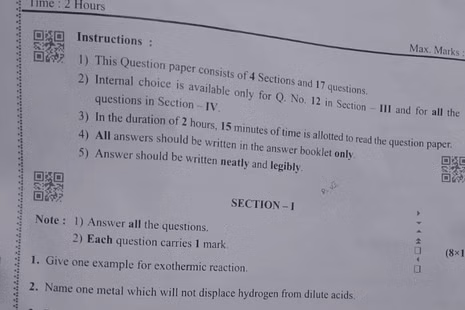
Question Number 6 |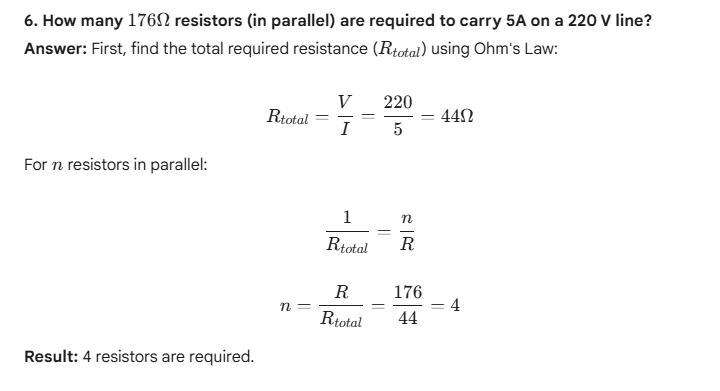
Question Number 8 |
Note: Detailed solutions for long answer questions can be checked through the live thread below. Scroll down to check.
AP SSC Physics Exam 2026 LIVE:
02 08 PM IST - 25 Mar'26
Answer for Question Number 16 (B) - Mechanism of the Cleaning Action of Soap
Soap molecules are sodium or potassium salts of long-chain carboxylic acids. They consist of two parts:
Hydrophilic Head: A polar head that is "water-loving."
Hydrophobic Tail: A long hydrocarbon chain that is "water-fearing" but "oil-loving."
Mechanism:
Micelle Formation: When soap is added to water containing oily dirt, the hydrophobic tails attach themselves to the oil/dirt, while the hydrophilic heads point outward into the water. This forms a spherical structure called a micelle.
Emulsification: The oil becomes trapped in the center of the micelle.
Removal: Since the surface of the micelle is negatively charged (heads), the micelles repel each other and stay suspended in water. When the clothes are agitated or rinsed, these micelles (carrying the dirt) are washed away with the water.
01 55 PM IST - 25 Mar'26
Answer for Question Number 15 (A) - Myopia: Cause, Effect, and Rectification
Myopia (Nearsightedness) is a defect of vision where a person can see nearby objects clearly but cannot see distant objects distinctly.
Causes:
1. Excessive curvature of the eye lens.
2. Elongation of the eyeball.
Effect: Light rays from a distant object converge in front of the retina instead of on it, resulting in a blurry image of far-off objects.
Rectification: This defect is corrected by using a concave (diverging) lens of suitable focal length. The lens diverges the incoming rays so that they appear to come from the eye's far point, allowing the eye lens to focus them exactly on the retina.
01 11 PM IST - 25 Mar'26
Answer for Question Number 13 - Write any two advantages of a) avoiding corrosion b) thermite process
a) Advantages of avoiding corrosion:
- Saves Economic Loss: It prevents the damage of expensive infrastructure like bridges, ships, and industrial machinery, saving huge repair and replacement costs.
- Ensures Safety: Corrosion weakens metallic structures; avoiding it prevents structural failures and accidents (like bridge collapses).
b) Advantages of the thermite process:
- On-site Repairs: It is highly effective for joining or repairing broken railway tracks and heavy machine parts right at the spot.
- No External Power: The reaction is so exothermic that it produces molten metal without the need for an external furnace or large power supply.
12 59 PM IST - 25 Mar'26
Answer for Question Number 12 (b) - Electrolytic Refining of Copper
This process is used to obtain pure copper from impure copper blocks. To draw this, include these labels:
Anode (+): A thick block of impure copper.
Cathode (-): A thin strip of pure copper.
Electrolyte: An acidified solution of Copper Sulphate
Anode Mud: Impurities that settle down below the anode.
Reaction Principle:
When current passes, Cu2+ ions from the electrolyte deposit on the cathode as pure copper, while an equivalent amount of copper from the impure anode dissolves into the electrolyte.
12 22 PM IST - 25 Mar'26
Answer for Question Number 12 - Draw a neat ray diagram
i) Object at C (Center of Curvature):
- Position of Image: Formed exactly at C.
- Nature of Image: Real and inverted.
- Size of Image: Same size as the object.
ii) Object between F (Focus) and C (Center of Curvature):
- Position of Image: Formed beyond C.
- Nature of Image: Real and inverted.
- Size of Image: Magnified (larger than the object).
12 10 PM IST - 25 Mar'26
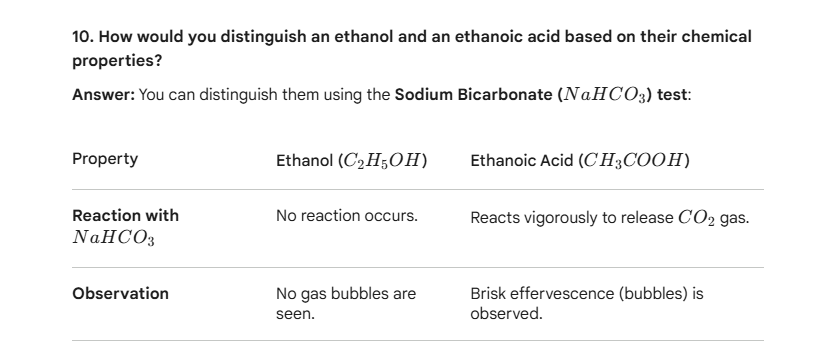
Answer for Question Number 10
11 56 AM IST - 25 Mar'26
Answer for Question Number 9
The process of dissolving an acid in water is highly exothermic (releases a large amount of heat).
- If water is added to acid: The heat generated is so intense that it can cause the mixture to splash out violently, potentially causing acid burns. The glass container may also break due to excessive local heating.
- If acid is added to water: Adding acid slowly with constant stirring allows the heat to be absorbed and dissipated by the larger volume of water, making the process much safer.
11 52 AM IST - 25 Mar'26
Paper Analysis & Unofficial Answer Available
The unofficial answre key of Physics has been added, and is now available on this page.
11 30 AM IST - 25 Mar'26
AP SSC Physics Exam 2026 Concludes Successfully
The AP SSC Physics Exam 2026 has concluded successfully across all examination centres without any major disruptions. The exam ended on time, and the process of collecting answer booklets was carried out smoothly under the supervision of invigilators.
Reports indicate that the overall conduct of the examination was systematic, with proper arrangements and strict monitoring ensuring fairness and transparency throughout the session.
11 16 AM IST - 25 Mar'26
AP SSC Physics Exam ends shortly
The Physics exam is ending at 11:30 AM. Our Counseling Shortcuts team is waiting at an exam centre in Mangalagiri to collect student reviews and question paper.
11 00 AM IST - 25 Mar'26
AP SSC Physics Exam 2026 to Conclude Shortly
The AP SSC Physics Exam 2026 is now in its final phase, with only a short duration remaining for completion. Inside exam halls, candidates are expected to be finishing their answers and utilizing the last few minutes for revision.
Authorities have ensured a calm and disturbance-free environment, allowing candidates to complete their papers smoothly. Instructions regarding proper submission of answer booklets are being followed strictly as the exam approaches its conclusion.
10 30 AM IST - 25 Mar'26
Flying Squads Intensify Monitoring Across Exam Centres
Flying squads have been actively inspecting multiple examination centres to ensure strict compliance with examination guidelines. Surprise checks are being conducted to prevent any form of malpractice and to maintain transparency in the process.
Officials are verifying seating arrangements, invigilation procedures, and adherence to rules inside the exam halls. So far, no major irregularities have been reported, indicating that the examination is being conducted in a disciplined and fair manner across all centres.
10 05 AM IST - 25 Mar'26
List of resources to be available here after the exam
The following resources shall be provided to students after the exam through this live blog -
- Unofficial Answer Key for 1 Mark and 2 Mark questions prepared by Counseling Shortcuts subject expert
- Student reviews on question paper from Mangalagiri region
- Expert opinion on difficulty level
- Live paper solving on CollegeDekhp YouTube Channel
09 30 AM IST - 25 Mar'26
AP SSC Physics Exam 2026 Begins Smoothly Across Centres
The AP SSC Physics Exam 2026 has officially commenced across examination centres in the state in a smooth and well-organized manner. Invigilators ensured that all students were seated well in advance, and clear instructions were given before the distribution of question papers and answer booklets. Authorities have maintained a disciplined environment inside the halls, allowing candidates to focus entirely on the paper.
09 00 AM IST - 25 Mar'26
Time Management Strategy Inside Exam Hall
Effective time management is helping students complete the paper smoothly without rushing at the end.
- First 5 minutes: Read question paper carefully
- 30 minutes: Complete Section A & B
- 60 minutes: Attempt Section C (numericals + diagrams)
- 45 minutes: Write Section D (long answers)
- Last 10–15 minutes: Revision
Balanced time allocation ensures all questions are attempted.
08 30 AM IST - 25 Mar'26
Answer Presentation Tips: How to Impress the Examiner
Students are advised to focus on neat and structured presentation, as it plays a crucial role in scoring marks, especially in Physics.
- Write answers in clear and readable handwriting
- Use headings and subheadings for long answers
- Highlight formulas and key terms
- Draw neat, labeled diagrams wherever required
- Maintain proper spacing between answers
A well-presented answer sheet creates a positive impression and helps examiners evaluate easily.
08 00 AM IST - 25 Mar'26
Checklist Before Leaving for Exam Centre
tudents are ensuring all essentials are ready before leaving.
- Hall ticket (mandatory)
- Pens, pencils, geometry tools
- Transparent pouch
- Water bottle (if allowed)
Students are advised to check everything carefully to avoid last-minute stress, focus on staying calm, and avoid anxiety before exam.
- Avoid discussing difficult topics
- Stay positive
- Trust preparation
07 05 AM IST - 25 Mar'26
Key Definitions & Short Answer Questions Revision
Important definitions:
- Electric current
- Refraction
- Magnetic field
- Conduction
Short-answer questions.
- State Ohm’s Law
- Laws of reflection
- Define electric power
- Fleming’s Left Hand Rule
06 00 AM IST - 25 Mar'26
Quick Tips for Final Revison
Students must revice all important formulas, as numericals are expected in the exam.
- Electricity:
- I = V/R
- P = VI
- Light:
- 1/f = 1/v + 1/u
- Heat:
- Q = mcΔT
Students are mentally revising formulas to ensure quick application during exam.
- Electricity:
05 10 AM IST - 25 Mar'26
Early Morning Quick Revision Begins: Focus on Formulas & Concepts
tudents have started their exam day with quick revision, focusing on important formulas, definitions, and key concepts rather than new topics. Most students are revising Electricity, Light, and Magnetism chapters.
- Key areas being revised:
- Ohm’s Law (V = IR)
- Lens formula
- Heat equations
- Students are avoiding lengthy reading and focusing only on short notes and highlights
- Key areas being revised:
04 15 AM IST - 25 Mar'26
Solve Numerical Based on Heat Equation.
Question:
Find heat energy if mass = 1 kg, specific heat = 4200 J/kg°C, temperature change = 10°C.Answer:
Formula:
Q = mcΔTSubstitute values:
Q = 1 × 4200 × 10Q = 42000 J
Conclusion:
Heat energy required is 42000 joules.03 10 AM IST - 25 Mar'26
Magnetic Fields ImportanT Question and Answer
Answer:
Fleming’s Left Hand Rule is used to determine the direction of force on a current-carrying conductor in a magnetic field.
Rule:
Stretch the thumb, forefinger, and middle finger of the left hand perpendicular to each other:- Forefinger → direction of magnetic field
- Middle finger → direction of current
- Thumb → direction of force
Conclusion:
This rule is applied in electric motors.02 00 AM IST - 25 Mar'26
What is Magnetic Field? Explain Magnetic Field Around a Conductor.
Answer:
Definition:
Magnetic field is the region around a magnet or current-carrying conductor where magnetic force is experienced.Explanation:
- When current flows through a conductor, it produces circular magnetic field lines around it.
- These lines are concentric circles.
Direction:
Given by Right-Hand Thumb Rule.Conclusion:
Magnetic field strength increases with current.01 05 AM IST - 25 Mar'26
Refrative Index
Answer:
A convex lens is a converging lens that brings parallel rays of light to a focus.
Working:
- When parallel rays fall on the lens, they converge at the focus.
- Rays passing through optical centre go straight without deviation.
Image Formation:
- Depends on object position
- Can form real or virtual images
Conclusion:
Convex lenses are used in cameras, microscopes, and spectacles.12 05 AM IST - 25 Mar'26
Define Refractive Index and Solve a Numerical.
Answer:
Definition:
Refractive index is the ratio of speed of light in vacuum to speed of light in a medium.Formula:
n = c / vNumerical:
Given: c = 3 × 10⁸ m/s, v = 2 × 10⁸ m/sn = (3 × 10⁸) / (2 × 10⁸)
n = 1.5Conclusion:
The refractive index of the medium is 1.5.11 00 PM IST - 24 Mar'26
Explain the Laws of Refraction.
Answer:
The laws of refraction describe how light bends when passing from one medium to another.
Laws:
- The incident ray, refracted ray, and normal at the point of incidence lie in the same plane.
- The ratio of sine of angle of incidence to sine of angle of refraction is constant for a given pair of media.
Mathematically:
sin i / sin r = constantConclusion:
These laws are used to study refraction and calculate refractive index.10 30 PM IST - 24 Mar'26
Define Electric Power and Derive its Formula.
Answer:
Definition:
Electric power is the rate at which electrical energy is consumed or work is done in an electric circuit.Derivation:
We know that:
Work done (W) = V × QWhere Q = charge and Q = I × t
Substituting,
W = V × I × tPower (P) = Work / Time
P = (V × I × t) / t
P = VIConclusion:
The formula for electric power is P = VI and its SI unit is watt.10 00 PM IST - 24 Mar'26
Balancing Chemical Equations: Practice Question
Q. Balance the following chemical equation:
BaCl₂ + H₂SO₄ → BaSO₄ + HCl
Answer:
Step 1: Write the unbalanced equation
BaCl₂ + H₂SO₄ → BaSO₄ + HClStep 2: Balance atoms
Cl atoms are 2 on left side, so multiply HCl by 2.Balanced Equation:
BaCl₂ + H₂SO₄ → BaSO₄ + 2HClConclusion:
The equation is now balanced according to law of conservation of mass.09 30 PM IST - 24 Mar'26
Speed Of Light: Practice Question 2
Q. Determine the speed of light in Benzene. (Speed of light in vacuum = 3 × 10⁸ m/s)
Answer:
Given:
Refractive index (n) = 1.50
Speed of light in vacuum (c) = 3 × 10⁸ m/sFormula:
n = c / v
v = c / nCalculation:
v = (3 × 10⁸) / 1.50
v = 2 × 10⁸ m/sConclusion:
The speed of light in Benzene is 2 × 10⁸ m/s.09 00 PM IST - 24 Mar'26
Speed Of Light: Practice Question 1
Q. Arrange the following media in ascending order of speed of light and justify your answer.
(Air: 1.0003, Ice: 1.31, Water: 1.33, Benzene: 1.50)
Answer:
Given:
Refractive index (n) values of different media.Concept:
Speed of light in a medium is inversely proportional to refractive index.
Speed ∝ 1/nArrangement:
Higher refractive index → lower speedBenzene (1.50) < Water (1.33) < Ice (1.31) < Air (1.0003)
Conclusion:
Air has the highest speed of light, while Benzene has the lowest.08 30 PM IST - 24 Mar'26
Oersted’s Experiment
Q. Explain the procedure to show that a compass needle is deflected when electric current passes through a conductor
Answer:
Aim:
To show that a current-carrying conductor produces a magnetic field.Apparatus:
Battery, key, straight conductor, compass needle, connecting wires.Procedure:
- Place a compass needle near a straight conductor.
- Connect the conductor to a battery through a key.
- Initially, the compass needle points in north-south direction.
- When current flows through the conductor, the compass needle deflects.
- When the current is switched off, the needle returns to original position.
Observation:
The compass needle deflects when current flows.Conclusion:
A current-carrying conductor produces a magnetic field around it.07 45 PM IST - 24 Mar'26
Explain Refractive Index and Solve Numerical
Answer:
Refractive index (n) is the ratio of speed of light in vacuum to speed in medium.
Formula:
n = c/vWhere:
c = speed of light in vacuum
v = speed in mediumNumerical:
If c = 3 × 10⁸ m/s and n = 1.5, find speed in medium.v = c/n = 3 × 10⁸ / 1.5
v = 2 × 10⁸ m/sConclusion:
Higher refractive index means slower speed of light.07 30 PM IST - 24 Mar'26
Solve Lens Formula Numerical (Long Answer Type)
Question:
An object is placed at 20 cm from a convex lens. The image is formed at 40 cm. Find focal length.Solution:
Given:
u = -20 cm
v = 40 cmFormula:
1/f = 1/v + 1/uSubstitute:
1/f = 1/40 – 1/20
1/f = (1 - 2)/40 = -1/40f = -40 cm
Conclusion:
The focal length of the lens is -40 cm.07 15 PM IST - 24 Mar'26
Explain Hypermetropia and Its Correction
Answer:
Hypermetropia is a defect of vision in which nearby objects are not seen clearly.
Cause:
- Image forms behind retina
- Due to short eyeball or weak lens
Correction:
- Using convex lens
- Lens converges light rays properly onto retina
Conclusion:
This defect can be corrected using suitable lenses.07 00 PM IST - 24 Mar'26
Explain Modes of Heat Transfer
Answer:
Heat is transferred in three modes:
1. Conduction
- Heat transfer in solids without movement of particles
- Example: Metal rod heating
2. Convection
- Heat transfer in liquids and gases due to movement
- Example: Boiling water
3. Radiation
- Heat transfer without medium
- Example: Heat from Sun
Conclusion:
Each mode depends on the medium and nature of heat transfer.06 45 PM IST - 24 Mar'26
Explain Working of Electric Motor
Answer:
An electric motor converts electrical energy into mechanical energy.
Principle:
A current-carrying conductor placed in a magnetic field experiences a force.Construction:
- Coil
- Magnet
- Split ring (commutator)
- Brushes
Working:
- When current flows through the coil, it experiences force.
- The coil rotates due to magnetic force.
- Direction of force is given by Fleming’s Left Hand Rule.
Conclusion:
Electric motors are widely used in fans, mixers, and machines.06 30 PM IST - 24 Mar'26
Derive Lens Formula
Answer:
The lens formula is derived using ray diagrams and geometry.
Formula:
1/f = 1/v + 1/uWhere:
f = focal length
v = image distance
u = object distanceDerivation Steps:
- Consider a convex lens with object and image positions
- Using similar triangles:
h₁/h₂ = v/u - By geometric relations, we get:
1/f = 1/v + 1/u
Conclusion:
This formula is used to calculate image distance and focal length in lenses.06 15 PM IST - 24 Mar'26
Explain Ohm’s Law with Graph
Answer:
Ohm’s Law states that the current flowing through a conductor is directly proportional to the potential difference across it, provided temperature remains constant.
Mathematically:
V ∝ I → V = IRWhere:
V = Voltage, I = Current, R = ResistanceGraph Explanation:
- When voltage is plotted against current, a straight line passing through origin is obtained.
- This shows that V and I are directly proportional.
Conclusion:
Ohm’s Law is useful in calculating current, voltage, and resistance in circuits.06 00 PM IST - 24 Mar'26
Most Repeated High-Probability Questions
- Ohm’s Law (8M)
- Lens formula derivation (8M)
- Electric motor (8M)
- Heat transfer (4M)
- Numericals from Electricity & Light
- Chemical equation balancing
- pH scale + bleaching powder
05 45 PM IST - 24 Mar'26
Human Eye and Colourful World
Most Repeated Questions
- What is myopia?
- What is hypermetropia?
- What is dispersion of light?
With Answer
- What is myopia?
A defect in which distant objects are not clearly visible.
4-Mark Question
- Explain defects of vision
8-Mark Question
- Explain working of human eye with diagram
05 30 PM IST - 24 Mar'26
Light – Reflection and Refraction
Most Repeated Questions
- Define reflection and refraction
- State laws of reflection
- What is refractive index?
Numerical (Very Important)
- Question:
Find focal length if u = -15 cm, v = 30 cm - Solution:
1/f = 1/v + 1/u
1/f = 1/30 – 1/15
1/f = -1/30
f = -30 cm
4-Mark Question
- Draw ray diagram for concave mirror
8-Mark Question
- Derive lens formula
05 15 PM IST - 24 Mar'26
Carbon and Its Compounds
Most Repeated Questions
- What is catenation?
- Define hydrocarbon
- What are alkanes, alkenes, alkynes?
Model Paper Based
- Complete table (Alkane, Alkene, Alkyne formulas)
4-Mark Question
- Explain homologous series
8-Mark Question
- Explain properties of carbon compounds
05 00 PM IST - 24 Mar'26
Metals and Non-Metals: Repeated Questions
Most Repeated Questions
- What are metals?
- Define non-metals
- What is reactivity series?
With Answer
- What is corrosion?
It is the gradual destruction of metals due to chemical reaction with environment.
4-Mark Question
- Explain properties of metals and non-metals
8-Mark Question
- Explain reactivity series with examples
04 45 PM IST - 24 Mar'26
Acids, Bases and Salts: Important Questions
Most Repeated Questions
- Define acid and base
- What is pH scale?
- What is neutralization reaction?
? With Answer
- What is pH?
pH is a scale used to measure acidity or basicity of a solution.
? 4-Mark Question
- Explain properties of acids and bases
? 8-Mark Question
- Explain preparation and uses of bleaching powder
04 30 PM IST - 24 Mar'26
Chemical Reactions and Equations: Most Repeated Questions
Most Repeated Questions
- Balance the equation:
Fe + H₂O → Fe₃O₄ + H₂ - What is a chemical reaction?
- Define oxidation and reduction
- What is corrosion?
- What is rancidity?
4-Mark Question
- Explain types of chemical reactions with examples
8-Mark Question
- Explain oxidation and reduction reactions with examples
- Balance the equation:
04 15 PM IST - 24 Mar'26
Electricity Questions with Detailed Answers
- State Ohm’s Law
Ohm’s Law states that at constant temperature, the current flowing through a conductor is directly proportional to the potential difference across its ends.
Formula: V = IR - Define resistance
Resistance is the opposition offered by a conductor to the flow of electric current. It depends on length, area, and material of the conductor.
- State Ohm’s Law
04 00 PM IST - 24 Mar'26
Important Questions with Answers
Key one-mark questions, focusing on clear and accurate definitions that are frequently asked in exams.
- What is electric current?
Electric current is the flow of electric charges through a conductor. Its SI unit is ampere. - What is potential difference?
It is the work done in moving a unit charge from one point to another. - What is electric power?
Electric power is the rate at which electrical energy is consumed. Its unit is watt.
- What is electric current?
03 45 PM IST - 24 Mar'26
Lens Formula Numerical
- Question:
u = -10 cm, v = 20 cm, find f - Solution:
1/f = 1/v + 1/u
1/f = 1/20 – 1/10
1/f = (1 - 2)/20 = -1/20
f = -20 cm
- Question:
03 30 PM IST - 24 Mar'26
Light Chapter: Data-Based Question
- Question: Arrange media in ascending order of speed of light
(Air: 1.0003, Ice: 1.31, Water: 1.33, Benzene: 1.50) - Solution:
Speed ∝ 1 / refractive index
Order: Benzene < Water < Ice < Air - Question: Which is optically denser?
Answer: Benzene
- Question: Arrange media in ascending order of speed of light
03 15 PM IST - 24 Mar'26
8-Mark: Most Important Long Answer Questions
These are top-priority questions, almost guaranteed in exam.
- State and explain Ohm’s Law with graph
- Derive lens formula
- Explain working of electric motor with diagram
- Explain modes of heat transfer
- Describe image formation by concave mirror
03 00 PM IST - 24 Mar'26
4-Mark: Most Reliable Numerical & Diagram Questions
- Calculate current using Ohm’s Law
- Find electric power using P = VI
- Draw ray diagram for concave mirror
- Explain image formation in convex lens
- Solve lens formula numerical
- Explain conduction process
- Draw electric circuit diagram
02 45 PM IST - 24 Mar'26
2-Mark: Most Expected Short Answer Questions
- State Ohm’s Law
- Define electric power and give formula
- State laws of reflection
- Define refractive index
- What is electromagnetic induction?
- Define convection with example
- What is resistance?
- Explain magnetic field around a conductor
02 30 PM IST - 24 Mar'26
1-Mark: Highly Repeated & Safe Questions
These are direct definition/unit questions repeated in almost every exam.
- Define electric current
- What is potential difference?
- SI unit of resistance
- Define electric power
- What is focal length?
- Define reflection of light
- What is refraction?
- Define magnetic field
- Unit of electric energy
- Define conduction
02 15 PM IST - 24 Mar'26
Final Numerical Practice Set
- Find current if V = 15V and R = 3Ω
- Calculate power if V = 20V, I = 2A
- Find resistance if V = 12V, I = 4A
- Calculate heat using Q = mcΔT
- Find focal length using lens formula
Concepts:
- Ohm’s Law problems
- Power and energy calculations
- Lens formula numericals
- Heat equation problems
02 00 PM IST - 24 Mar'26
Electrical Power Consumption Numerical
- Question:
Find power if voltage is 24V and resistance is 6Ω. - Solution:
First find current: I = V/R = 24/6 = 4A
Then power: P = VI = 24 × 4
Final Answer: P = 96W
- Question:
01 45 PM IST - 24 Mar'26
Heat Numerical: Temperature Change Problem
- Question:
Calculate heat energy if mass = 2 kg, specific heat = 4200 J/kg°C, temperature change = 5°C. - Solution:
Formula: Q = mcΔT
Q = 2 × 4200 × 5
Final Answer: Q = 42000 J
- Question:
01 30 PM IST - 24 Mar'26
Lens Formula Numerical: Image Formation Problem
- Question:
Find focal length if object distance = -10 cm and image distance = 20 cm. - Solution:
Formula: 1/f = 1/v + 1/u
Substitute values carefully
Solve step by step
Final Answer: f = 6.67 cm (approx.)
- Question:
Find magnification if image distance = 15 cm and object distance = 5 cm. - Solution:
Formula: m = v / u
Substitution: m = 15 / 5
Final Answer: m = 3
- Question:
01 15 PM IST - 24 Mar'26
Resistance Numerical: Finding Resistance Value
- Question:
Find the resistance of a conductor if voltage is 20V and current is 5A. - Solution:
Formula: R = V / I
Substitution: R = 20 / 5
Final Answer: R = 4Ω
- Question:
Calculate electrical energy consumed if power is 100W for 2 hours. - Solution:
Formula: E = P × t
Time = 2 hours = 7200 seconds
E = 100 × 7200
Final Answer: E = 720000 J
- Question:
01 00 PM IST - 24 Mar'26
Electricity Numerical: Ohm’s Law Based Problem
- Question:
Find the current flowing through a conductor if voltage is 12V and resistance is 4Ω. - Solution:
Formula: I = V / R
Substitution: I = 12 / 4
Final Answer: I = 3A
- Question:
Calculate the electric power when voltage is 10V and current is 2A. - Solution:
Formula: P = VI
Substitution: P = 10 × 2
Final Answer: P = 20W
- Question:
12 45 PM IST - 24 Mar'26
Final High-Probability Block: Most Expected Questions
- Ohm’s Law (8M)
- Lens formula (8M)
- Electric motor (8M)
- Heat transfer (4M)
- Numericals from Electricity (4M)
- Question:
u = -10 cm, v = 20 cm, find f - Solution:
1/f = 1/v + 1/u
1/f = 1/20 – 1/10
1/f = (1 - 2)/20 = -1/20
f = -20 cm
12 30 PM IST - 24 Mar'26
Most Reliable Questions
- Define electric current
- State Ohm’s Law
- Draw ray diagram of concave mirror
- Derive lens formula
- Explain electric motor
- Define convection
- Calculate power using formula
- Explain hypermetropia
12 15 PM IST - 24 Mar'26
Table-Based Question (Hydrocarbon Series)
- Fill missing:
- Alkane → CₙH₂ₙ₊₂
- Alkene → CₙH₂ₙ
- Alkyne → CₙH₂ₙ₋₂
- Example:
- C₄H₈ → Alkene
- C₅H₈ → Alkyne
- Fill missing:
12 00 PM IST - 24 Mar'26
Chemistry-Based Question from Previous Paper Paper
- Question: Balance equation
NaCl + AgNO₃ → AgCl + NaNO₃ - Answer: Already balanced
- Question:
BaCl₂ + H₂SO₄ → BaSO₄ + HCl - Balanced:
BaCl₂ + H₂SO₄ → BaSO₄ + 2HCl
- Question: Balance equation
11 45 AM IST - 24 Mar'26
Heat Chapter: Questions with Answers
Students are revising Heat chapter.
- Define conduction → Heat transfer in solids
- Define convection → Heat transfer in liquids/gases
- Define radiation → Heat transfer without medium
- 4-Mark Question:
Explain modes of heat transfer
11 30 AM IST - 24 Mar'26
Electric Motor Explanation
- Question: Explain working of electric motor
- Answer Points:
- Based on magnetic effect of current
- Coil rotates in magnetic field
- Direction by Fleming’s rule
- Question: Explain construction and working of electric motor with diagram
- Answer Includes:
- Parts (coil, magnet, commutator)
- Working principle
- Diagram
11 15 AM IST - 24 Mar'26
Most Expected Long Answer with Structure
- Question: Explain Ohm’s Law with graph
- Answer Points:
- Statement of law
- Formula V = IR
- Graph (V vs I straight line)
- Conclusion
- Question: What is Hypermetropia? How is it corrected?
- Answer Points:
- Difficulty in seeing nearby objects
- Image forms behind retina
- Corrected using convex lens
11 00 AM IST - 24 Mar'26
Numerical Problems with Step-wise Solutions
Students need to practice important numericals, which are repeated every year.
- Question:
Find current if voltage = 24V and resistance = 6Ω - Solution:
Formula: I = V/R
I = 24/6
I = 4A - Question:
Calculate power if V = 10V and I = 3A - Solution:
P = VI = 10 × 3 = 30W
- Question:
10 45 AM IST - 24 Mar'26
Most Repeated Long Answer Questions
- State and explain Ohm’s Law
- Derive lens formula
- Explain working of electric motor
- Explain modes of heat transfer
- Describe image formation by lenses
10 30 AM IST - 24 Mar'26
Most Repeated Numerical Problems
- Calculate current using V and R
- Find power using P = VI
- Determine resistance in circuit
- Numerical on lens formula
- Heat energy calculation problems
10 15 AM IST - 24 Mar'26
Most Repeated Short Answer Questions
Now focus on 2-mark questions that require short explanations and are commonly asked in previous papers.
- State Ohm’s Law
- Define electric power
- State laws of reflection
- What is electromagnetic induction?
- Define conduction and convection
- What is resistance?
10 00 AM IST - 24 Mar'26
Magnetism Long Answer Questions
- Explain construction and working of electric motor
- Describe Fleming’s rules in detail
- Explain electromagnetic induction with diagram
09 45 AM IST - 24 Mar'26
4 Marks: Magnetism Application
Students have to practice application-based 4-mark questions from Magnetism.
- Explain working of electric motor
- Describe magnetic field around conductor
- Explain electromagnetic induction
These questions require explanation along with diagrams.
09 30 AM IST - 24 Mar'26
Magnetic Effects Questions: 2 Marks
Students are revising one-mark questions from Magnetism, focusing on definitions and basic concepts.
- Define magnetic field
- Unit of magnetic field
- What is electromagnet?
- Define current-carrying conductor
- What is magnetic force?
09 15 AM IST - 24 Mar'26
1 Mark: Magnetic Effects Questions
Students must one-mark questions from Magnetism, focusing on definitions and basic concepts.
- Define magnetic field
- Unit of magnetic field
- What is electromagnet?
- Define current-carrying conductor
- What is magnetic force?
09 00 AM IST - 24 Mar'26
Light Chapter Long Questions
Students can expert one 8-mark questions from Light chapter, covering derivations and detailed explanations.
- Derive lens formula
- Explain image formation by concave mirror
- Discuss laws of refraction in detail
These are considered highly important based on previous exam patterns.
08 45 AM IST - 24 Mar'26
Section I (1-Mark Questions): Most Important Definitions
Students are beginning revision with one-mark questions, which are direct and scoring.
- Important 1-Mark Questions:
- What is SI unit of current? → Ampere
- Define electric current → Flow of charges
- What is resistance? → Opposition to current
- Unit of power → Watt
- Define refraction → Bending of light
- These questions require precise one-line answers and are frequently repeated in exams.
- Important 1-Mark Questions:
08 30 AM IST - 24 Mar'26
Ray Diagram Questions Practice
Students have to revise 4-mark diagram-based questions, especially from mirrors and lenses.
- Draw ray diagram for concave mirror
- Explain image formation in convex lens
- Draw diagram showing refraction
Diagrams with proper labeling and explanation form a major part of this section.
08 15 AM IST - 24 Mar'26
2 Marks: Light Chapter Questions
Students are now focusing exclusively on 2-mark questions from Light chapter, covering both reflection and refraction concepts.
- State laws of reflection
- Define refraction with example
- What is refractive index?
- Define principal axis
- What is optical centre?
These questions require short explanations and are frequently asked in exams.
08 00 AM IST - 24 Mar'26
Light Chapter Important Questions (1 marks)
Students have shifted to Light chapter and are revising only important 1-mark questions from reflection and refraction.
- Define reflection
- What is refraction?
- Define focal length
- What is a lens?
- Unit of focal length
These questions are being revised quickly for better recall during the exam.
07 45 AM IST - 24 Mar'26
Important Numericals from Electricity Chapter
Preparation has moved towards 4-mark numerical problems, which are considered crucial for scoring high marks. Students are practicing structured solutions involving formulas and substitutions.
- Calculate current using given voltage and resistance
- Find electric power using P = VI
- Determine resistance in a circuit
These numericals require step-wise presentation and are commonly seen in model papers.
07 30 AM IST - 24 Mar'26
Ohm’s Law & Derivation
- Important 8-Mark Questions:
- State and explain Ohm’s Law
- Derive relation V = IR
- Answer should include:
- Statement
- Graph explanation
- Conclusion
- These are highly expected long-answer questions.
- Important 8-Mark Questions:
07 15 AM IST - 24 Mar'26
Section II (2-Mark Questions): Electricity & Basic Concepts
Students are revising 4-mark numericals, which are very important.
- Important 4-Mark Questions:
- Calculate resistance using V and I
- Find power using P = VI
- Example:
- V = 20V, I = 4A → P = 80W
- These questions require:
- Formula
- Substitution
- Final answer
- Important 4-Mark Questions:
07 00 AM IST - 24 Mar'26
Section II (2-Mark Questions): Important Q&A
Students are revising 2-mark short answers, which require precise explanation.
- Questions:
- State Ohm’s Law
- Define electric power
- Answers:
- Ohm’s Law: V ∝ I
- Electric Power: Rate of doing work
- Tip:
- Write 2–3 points maximum
Keep answers short and accurate
- Write 2–3 points maximum
- Questions:
06 45 AM IST - 24 Mar'26
Electricity Numericals: Step-Wise Practice
Students are solving basic numericals from Electricity chapter, which are highly expected.
- Question:
Find current if V = 12V, R = 4Ω - Solution:
Formula: I = V/R
I = 12/4 = 3A - Tips:
- Always write formula first
- Show substitution clearly
- Step-wise presentation ensures full marks
- Question:
06 30 AM IST - 24 Mar'26
Section I (1-Mark Questions): Most Important Concepts
Students are starting revision with 1-mark questions, which are quick scoring and help in boosting confidence early in the day.
- Important Questions:
- What is SI unit of current? → Ampere
- Define voltage → Potential difference between two points
- What is resistance? → Opposition to flow of current
- Tip:
- Write answers in one clear line
- Avoid unnecessary explanation
- 1-mark questions can secure easy marks if revised properly
- Important Questions:
06 15 AM IST - 24 Mar'26
Numerical Problem Practice: Step-Wise Approach
Students are practicing numericals with proper steps.
- Steps:
- Write formula
- Substitute values
- Solve
- Tip:
- Show all steps for full marks
Even small mistakes can reduce marks
- Show all steps for full marks
- Steps:
06 00 AM IST - 24 Mar'26
Heat Chapter: Short Notes & Definitions
Students are revising Heat chapter for short answers and definitions.
- Important topics:
- Conduction, convection, radiation
- Expected question:
- Explain modes of heat transfer
Write answers in simple language with examples
- Explain modes of heat transfer
- Important topics:
05 45 AM IST - 24 Mar'26
Magnetic Effects: Fleming’s Rules & Applications
Magnetism concepts are being revised with focus on rules and diagrams.
- Key concepts:
- Fleming’s Left Hand Rule
- Fleming’s Right Hand Rule
- Expected question:
- Explain motor principle
Practice diagram along with explanation
- Explain motor principle
- Key concepts:
05 30 AM IST - 24 Mar'26
Light Chapter: Ray Diagrams & Concept Clarity
Students are focusing on reflection and refraction, especially diagram-based questions.
- Important:
- Ray diagrams for mirrors and lenses
- Laws of reflection
- Tip:
- Draw neat, labeled diagrams
Diagrams can fetch easy marks if presented clearly
- Draw neat, labeled diagrams
- Important:
05 15 AM IST - 24 Mar'26
Electricity Chapter: Important Questions & Formula Revision
Electricity is one of the most scoring chapters, and students are revising formulas and numericals.
- Important Questions:
- State Ohm’s Law
- Calculate current using V and R
- Key formula:
- V = IR
- Tip:
- Practice at least 2 numericals
- Important Questions:
05 00 AM IST - 24 Mar'26
Early Morning Revision Begins: Focus on High-Weightage Chapters
Students have started their final day preparation early, focusing on important chapters with high weightage. As per blueprint, topics like Electricity, Light, and Magnetic Effects are crucial.
- Priority areas:
- Ohm’s Law numericals
- Ray diagrams
- Fleming’s rules
- Counseling Shortcuts Experts advise revising formulas first
Strong concept clarity at this stage boosts confidence significantly
- Priority areas:
08 00 PM IST - 23 Mar'26
Balance Chemical Equation and Explain Type
Question:
Balance: Fe + H₂O → Fe₃O₄ + H₂Solution:
Balanced equation:
3Fe + 4H₂O → Fe₃O₄ + 4H₂Explanation:
- This is a redox reaction
- Iron is oxidized
- Hydrogen is reduced
Conclusion:
Balancing ensures conservation of mass.